Sensors, Schedules, and Sense: Choosing the Right Maintenance Model for Your Precision Equipment
The industrial IoT market has been remarkably effective at generating enthusiasm. Vibration sensors, thermal imaging arrays, oil condition monitors, and cloud-connected PLCs are now actively marketed to manufacturers of every size, with ROI projections that tend to assume perfect implementation and none of the organizational friction that characterizes real production environments. The pitch is seductive: stop maintaining on a calendar and start maintaining on data.
The underlying premise is not wrong. Predictive maintenance, when properly implemented, does reduce unplanned downtime, extend component life, and lower total maintenance spend. The problem is that the marketing has outrun the operational reality in many facilities. Mid-sized precision manufacturers in particular are purchasing sensor packages before they have addressed the foundational maintenance disciplines that make predictive data meaningful—and they are discovering, often after significant capital outlay, that technology cannot substitute for process.
Understanding What Each Model Actually Promises
Before evaluating investment options, it is worth being precise about what preventive and predictive maintenance each actually deliver—and where each falls short.
Preventive maintenance (PM) operates on fixed intervals: change this oil every 500 hours, inspect this spindle bearing every 90 days, recalibrate this axis every quarter. The logic is actuarial rather than diagnostic. PM schedules are derived from manufacturer recommendations, historical failure data, and engineering judgment about wear rates. They are not optimized for any individual machine's actual operating condition—they are optimized for an average machine in average conditions.
This means PM inevitably involves some waste. Components are replaced before they have fully exhausted their service life. Inspections are performed when nothing is wrong. But PM also provides something predictive systems struggle to replicate: structural discipline. A well-executed PM program ensures that lubrication, calibration, and inspection tasks happen consistently, regardless of production pressure, staff turnover, or data system availability.
Predictive maintenance (PdM) uses real-time or near-real-time sensor data to assess actual equipment condition and forecast failure probability. Rather than replacing a bearing on a schedule, a PdM system monitors vibration signatures and alerts maintenance personnel when anomalous patterns suggest imminent failure. The theoretical benefit is compelling: intervene only when necessary, extend component life to its actual limit, and avoid both premature replacement and catastrophic failure.
In practice, PdM systems require several enabling conditions that are frequently underestimated. Sensor data must be clean and consistently collected. Baseline signatures must be established during known-good operating states. Algorithms must be tuned to the specific equipment and application. And maintenance personnel must be trained to interpret alerts rather than simply respond to them—a capability gap that is common in facilities transitioning from schedule-based systems.
The Hybrid Model: Where Most Manufacturers Should Start
For the majority of precision manufacturers operating between $20 million and $200 million in annual revenue, a full transition to predictive maintenance is neither practical nor necessary. The more defensible approach is a hybrid model that preserves the structural discipline of preventive maintenance while selectively layering condition monitoring onto the equipment where unplanned failure carries the highest cost.
Identifying those high-stakes assets requires a straightforward criticality assessment. Consider three dimensions for each major piece of equipment: the cost of an unplanned failure event (including scrap, rework, and delivery impact), the lead time to restore production (whether through repair, spare parts availability, or backup capacity), and the historical failure mode of the equipment. Assets that score high on all three dimensions are genuine candidates for condition monitoring investment. Equipment that is inexpensive to restore, has predictable failure modes, and carries low production impact is better served by a robust PM schedule than by sensor infrastructure.
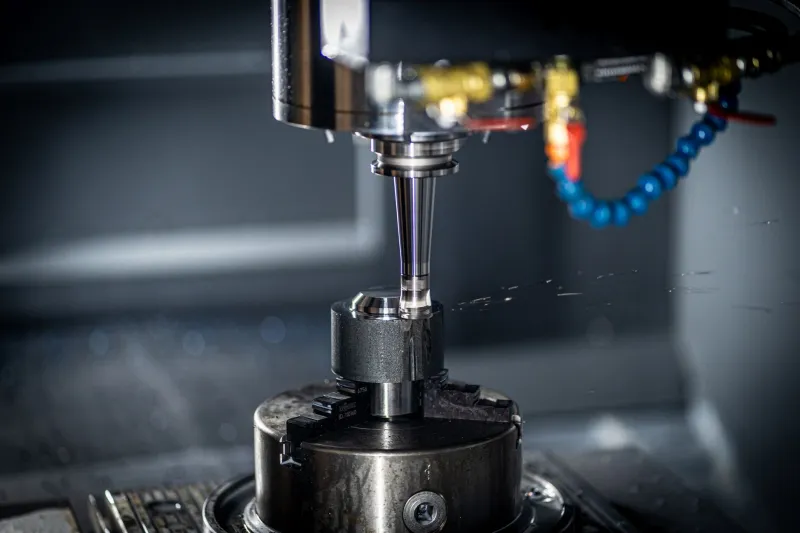
A five-axis machining center running tight-tolerance aerospace components on a long-lead contract is a strong candidate for spindle vibration monitoring and thermal imaging. A coolant pump serving a general-purpose turning cell is probably not.
What the Sensor Vendors Don't Emphasize
Condition monitoring platforms have improved substantially in usability over the past five years. Installation is faster, cloud connectivity is more reliable, and dashboards have become genuinely interpretable by non-specialists. But several adoption challenges remain underreported in vendor materials.
Alert fatigue is real. Systems configured with default sensitivity settings frequently generate more alerts than maintenance teams can meaningfully act on. When alerts are common, they become background noise. The result, paradoxically, is that a facility with extensive sensor coverage may respond less effectively to genuine warning signals than one with a simpler, well-maintained PM program.
Data without context is not insight. A vibration anomaly on a spindle means different things depending on whether the machine has recently been recalibrated, whether it is cutting a particularly demanding material, or whether a toolholder was recently replaced. Sensor data interpreted without that operational context leads to incorrect diagnoses and unnecessary interventions.
Maintenance culture precedes maintenance technology. This point deserves emphasis. Facilities where PM tasks are routinely deferred, where maintenance logs are incomplete, and where technicians lack the training to interpret basic diagnostic data will not become high-functioning predictive maintenance operations by adding sensors. The technology amplifies existing discipline—it does not create it.
Making the Investment Decision
For operations and procurement teams evaluating condition monitoring platforms, the decision framework should begin not with technology selection but with a candid assessment of current PM compliance. If scheduled maintenance tasks are being completed on time and documented consistently, the facility has the foundation to benefit from predictive augmentation. If PM compliance is inconsistent, the higher-priority investment is process discipline, not sensor hardware.
When evaluating specific platforms, total cost of ownership should include sensor hardware, installation, software licensing, ongoing calibration, and—critically—the internal labor required to manage and interpret the system. Vendors frequently model ROI on avoided failure costs while understating the operational cost of running the system effectively.
Piloting on a single asset class before committing to facility-wide deployment is strongly advisable. A three-to-six-month pilot on a representative critical asset will generate real data on alert quality, integration complexity, and staff adoption that no vendor demonstration can replicate.
The Right Question to Ask
The most useful reframe for this decision is not "predictive versus preventive" but rather "where does uncertainty in my maintenance program carry the highest cost?" That question points directly to the assets and failure modes where monitoring investment will generate genuine return—and away from the temptation to deploy technology broadly in pursuit of a transformation that begins, and must begin, with fundamentals.