The Virtual Factory Floor: How Digital Twin Technology Is Redefining Quality Control in Precision Manufacturing
For decades, quality control in precision engineering operated on a fundamentally reactive premise: produce the part, measure it, and correct what fell outside specification. The costs embedded in that cycle — scrapped material, machine downtime, delayed shipments — were accepted as an unavoidable tax on manufacturing complexity. Digital twin technology is dismantling that assumption entirely.
A digital twin is a dynamic, data-synchronized virtual replica of a physical asset, process, or system. In the context of precision engineering, it allows manufacturers to simulate component behavior, stress conditions, and tolerance interactions in a controlled digital environment before committing resources to physical production. What was once a speculative concept confined to aerospace research labs has matured into a deployable enterprise solution that US industrial operators are integrating into their standard quality frameworks.
From Reactive Inspection to Predictive Assurance
Traditional quality control workflows are structured around detection. Coordinate measuring machines, surface profilometers, and optical inspection systems are all designed to identify deviations after they have already been introduced into a part. The digital twin model inverts this logic by shifting the point of intervention upstream — into the design and process planning phase.
By feeding real-world sensor data, material property databases, and historical machining performance metrics into a simulation environment, engineering teams can model how a component will respond to specific cutting parameters, thermal cycling, or assembly loads. If a tolerance stack-up is likely to cause interference under operating conditions, the simulation surfaces that conflict before toolpaths are programmed or raw stock is allocated.
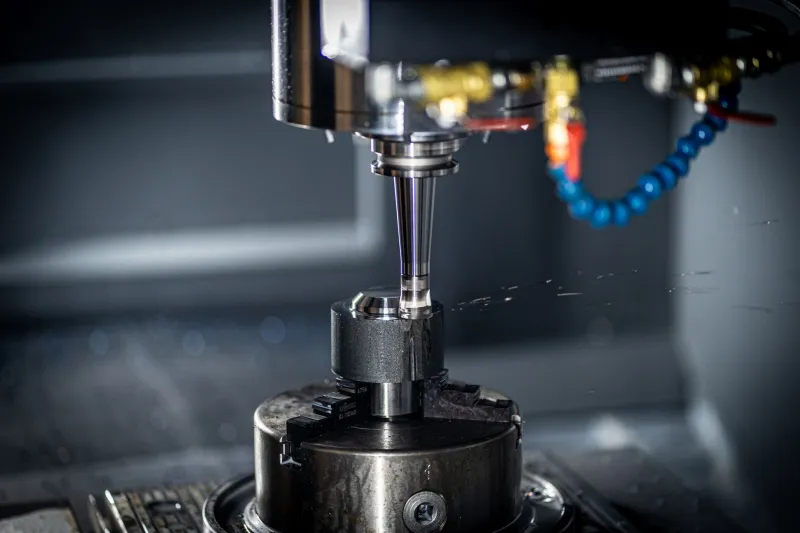
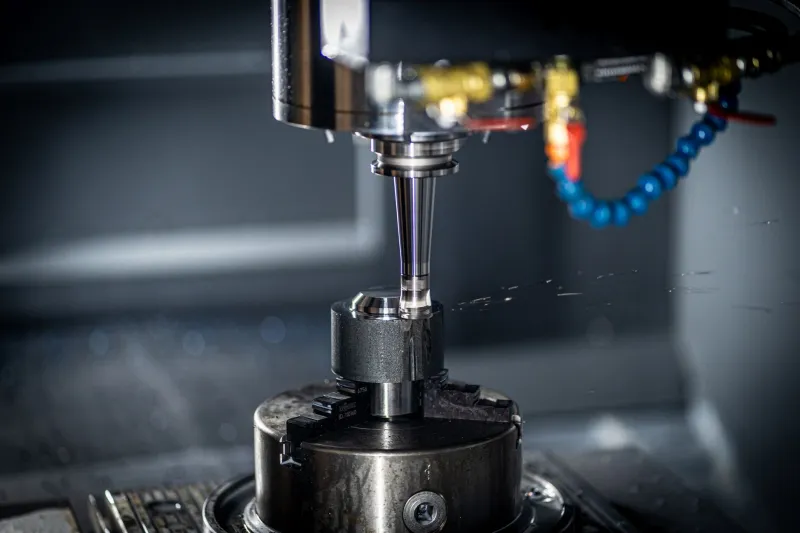
This predictive posture is particularly valuable for high-complexity assemblies — multi-axis machined housings, precision gearboxes, hydraulic manifolds — where downstream fit and function depend on the cumulative interaction of dozens of individual dimensions. In these applications, catching a single critical deviation in simulation rather than on the inspection bench can eliminate hours of rework and prevent schedule disruptions that ripple across an entire production run.
Real-World Adoption Among US Industrial Manufacturers
Several prominent US manufacturers have moved beyond pilot programs and embedded digital twin workflows into their standard operating procedures.
In the aerospace supply chain, Tier 1 and Tier 2 component suppliers have been among the earliest adopters, driven in part by OEM requirements for model-based definition and digital thread traceability. Companies machining turbine blades, structural brackets, and actuation components now routinely validate their process models against digital twin simulations before production release, using the output to set tighter statistical process control limits and reduce first-article inspection cycles.
In the heavy equipment and industrial machinery sector, manufacturers producing large-bore cylinders, precision weldments, and custom drive components have applied digital twins to address a different challenge: managing the variability introduced by material lot differences and machine-to-machine inconsistency across multi-site production networks. By anchoring the twin to live machine performance data, engineering teams can adjust process parameters dynamically to maintain output quality even as input conditions shift.
The energy sector — particularly manufacturers supplying components for oil and gas, power generation, and renewable infrastructure — has found digital twin simulation useful for predicting fatigue life and failure modes under cyclic loading, reducing the reliance on destructive testing and accelerating qualification timelines for safety-critical parts.
The ROI Metrics That Justify Investment
For procurement and operations leadership evaluating digital twin adoption, the financial case rests on several measurable variables.
Rework and scrap reduction is typically the most immediate and quantifiable benefit. Manufacturers that have implemented simulation-driven process validation consistently report reductions in nonconforming part rates, with some operations citing decreases of 30 to 50 percent in first-pass rejection rates for complex geometries. At the per-unit cost levels associated with precision-machined components, those reductions translate directly to margin improvement.
Compressed qualification timelines represent a second significant value driver. First-article inspection and process qualification for a new precision component can consume weeks of engineering time and machine capacity. Digital twin simulations accelerate this process by front-loading the validation work, allowing physical FAI to confirm a prediction rather than conduct an open-ended investigation.
Reduced warranty and field failure exposure is a longer-cycle benefit but one that carries substantial financial weight. When simulation data identifies a latent failure mode before a part enters service, the avoided cost includes not only replacement parts and labor but also the reputational and contractual consequences of field failures in enterprise supply relationships.
Engineering capacity reallocation is an often-overlooked efficiency gain. When simulation handles the iterative tolerance analysis and process optimization work, experienced engineers are freed from repetitive troubleshooting to focus on higher-value design and continuous improvement activities.
Implementation Considerations for Engineering Teams
Adopting digital twin technology is not a plug-and-play proposition. Successful implementation requires deliberate preparation across several dimensions.
Data infrastructure is foundational. A digital twin is only as accurate as the data that feeds it. Organizations that lack structured repositories of historical machining performance, material certifications, and inspection results will need to invest in data collection and management systems before meaningful simulation capability can be established.
Model fidelity must be calibrated to purpose. Not every application requires the same level of simulation complexity. Engineering teams should define the specific quality risk they are trying to address — tolerance stack-up, thermal deformation, surface integrity — and build twin models with the fidelity appropriate to that objective. Over-engineering the simulation environment adds cost without proportionate benefit.
Integration with existing CAD/CAM and ERP systems determines whether the digital twin becomes a live operational tool or an isolated analytical exercise. Organizations that connect their twin environments to production scheduling, quality management systems, and supplier data feeds gain compounding value as the model accumulates real-world feedback over time.
Workforce capability development should not be treated as an afterthought. The engineers and quality technicians who interact with digital twin outputs need sufficient training to interpret simulation results critically — understanding both the predictive power and the inherent limitations of the models they are using.
Precision Engineering in the Digital Age
The adoption of digital twin technology reflects a broader shift in how leading manufacturers conceptualize quality — not as a checkpoint at the end of a process, but as a designed-in characteristic that is validated continuously from concept through production. For enterprise manufacturers competing on delivery performance, part quality, and total cost of ownership, this shift is not merely a technological upgrade. It is a strategic repositioning.
As simulation tools become more accessible and the data ecosystems that support them more mature, the gap between organizations that have embraced predictive quality frameworks and those still relying on post-production inspection will continue to widen. The manufacturers that act now to build these capabilities will be better positioned to meet the increasingly stringent quality and traceability requirements that enterprise customers demand — and to do so at a cost structure that sustains long-term competitiveness.