Bringing It Home: How US Manufacturers Are Rebuilding Precision Engineering Capacity in 2024
A Structural Shift, Not a Cyclical Correction
The conversation about reshoring US manufacturing has been ongoing for well over a decade, but 2024 represents something qualitatively different from earlier iterations of the debate. What was once a policy aspiration or a niche competitive strategy has become a measurable, capital-backed industrial movement — one that is particularly concentrated in precision engineering and advanced component manufacturing.
According to data from the Reshoring Initiative, the number of manufacturing jobs announced as reshored or retained through foreign direct investment in the United States reached record levels in recent years, with precision machining, aerospace components, and semiconductor supply chain elements among the leading categories. The Bipartisan Infrastructure Law, the CHIPS and Science Act, and the Inflation Reduction Act have collectively directed hundreds of billions of dollars toward domestic industrial capacity — and that capital is beginning to show up on factory floors.
For enterprise procurement teams evaluating their supply chains, this shift creates both opportunity and complexity. The domestic precision manufacturing landscape is expanding, but not uniformly. Understanding where genuine capability exists — and where marketing is outpacing operational reality — is increasingly important work.
Why the Offshore Model Showed Its Limits
The appeal of offshore precision manufacturing, particularly in East Asia, was built on a combination of lower labor costs, available capacity, and decades of accumulated tooling and process expertise. For many US manufacturers, that model delivered real savings through the 1990s and 2000s.
The vulnerabilities became visible in stages. The COVID-19 pandemic exposed the fragility of extended, single-source supply chains in ways that no risk assessment document had fully captured. Port congestion, container shortages, factory shutdowns, and raw material allocation disruptions combined to create multi-month lead time extensions across dozens of industrial categories. Companies that had optimized their supply chains for cost found themselves unable to optimize them for continuity.
Geopolitical tension in the Taiwan Strait introduced a new dimension of risk for electronics and semiconductor-adjacent manufacturing. Export control developments affecting advanced machining technology added compliance complexity. And a persistent appreciation in offshore labor costs, combined with rising logistics expenses, steadily eroded the unit cost advantage that had justified the original offshoring decisions.
"The math changed," noted one supply chain director at a Midwest-based industrial equipment manufacturer in a recent industry forum discussion. "When you fully load the cost of carrying extra inventory, managing quality at a distance, and absorbing the occasional catastrophic delay, domestic sourcing started looking a lot more competitive than our spreadsheets from 2015 suggested."
Where Investment Is Concentrating
The reshoring of precision engineering is not evenly distributed across the United States. Investment is clustering around existing industrial infrastructure corridors — the manufacturing belt running from Ohio through Michigan and into the upper Midwest, the aerospace supply chain hubs in the Southeast, and emerging advanced manufacturing centers in Texas and the Mountain West.
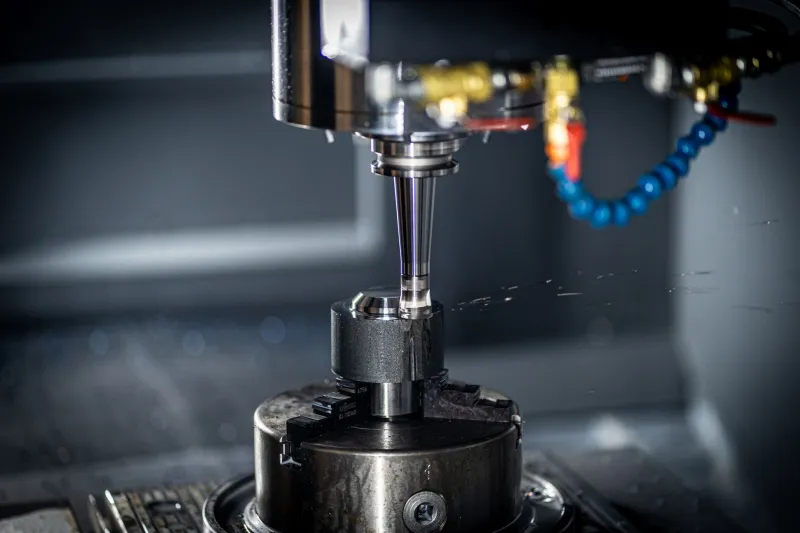
The capabilities attracting the most investment share a common profile: they require significant capital equipment, skilled operator expertise, and process discipline that is difficult to replicate quickly. Five-axis CNC machining centers, electrical discharge machining, precision grinding, and coordinate measuring machine-equipped quality laboratories represent the kinds of infrastructure that cannot be stood up overnight.
For enterprise buyers, this concentration of investment creates a meaningful differentiation point. A domestic precision manufacturer that has invested in advanced metrology, in-house materials testing, and digital quality management systems is offering something substantively different from a job shop that has simply added capacity to chase reshoring demand.
The Speed and Responsiveness Advantage
Beyond risk mitigation, domestic precision manufacturing partnerships offer an operational advantage that enterprise clients in product development and low-to-medium volume production increasingly value: responsiveness.
An engineering change that might take six to eight weeks to implement with an offshore supplier — accounting for communication lag, time zone differences, tooling revision lead times, and shipping — can often be turned around in days with a domestic partner operating in the same time zone and capable of direct technical collaboration.
For companies competing in markets where product iteration speed matters, this responsiveness is not a soft benefit. It translates directly into time-to-market advantage and reduced development cost. Several enterprise clients in the defense and medical device sectors have cited the ability to conduct on-site process reviews and rapid prototype iterations as a primary driver of their reshoring decisions, independent of any cost or risk calculation.
Evaluating Domestic Partners: Capability Over Geography
The reshoring trend has expanded the domestic supplier landscape, but expansion alone does not guarantee quality. Enterprise buyers should approach domestic precision manufacturers with the same rigorous evaluation standards they would apply to any critical supplier.
Key indicators of genuine precision engineering capability include demonstrated process capability data (Cpk indices for critical dimensions), investment in modern metrology equipment, relevant industry certifications (AS9100 for aerospace, ISO 13485 for medical, ITAR registration for defense), and a documented quality management system with traceable corrective action records.
Geographic proximity is a logistics advantage, not a quality credential. The most valuable domestic precision manufacturing partners are those that combine the accessibility and responsiveness of local operations with the technical depth and process discipline that complex industrial applications demand.
Keling Industrial's Perspective on the Domestic Landscape
At Keling Industrial, we view the reshoring movement as a structural realignment that rewards manufacturers who have consistently invested in precision capability rather than those who are now scrambling to position themselves for a trend. Our enterprise solutions are built on the premise that domestic manufacturing partnerships should offer clients something more than a shorter shipping lane — they should offer a deeper level of technical collaboration, quality transparency, and supply chain reliability.
The companies that will benefit most from this reshoring moment are those that approach it strategically: identifying the specific capabilities and partnership qualities that their supply chains genuinely require, and selecting domestic partners who can demonstrate — not merely assert — that they meet those standards. The geography is changing. The fundamentals of precision manufacturing evaluation are not.